Thinking about private universities in California for 2024? You’ve got some truly exceptional options. This guide will walk you through some of the top-tier institutions, focusing on what makes each stand out so you can get a clearer picture of where you might thrive. We’ll look at academic strengths, campus culture, and what kind of student each school typically attracts.
Getting Started: Understanding Your Options
California is a hub for higher education, and its private universities are consistently ranked among the best in the nation. When you’re sifting through these schools, it’s not just about prestige – it’s about finding the right fit for your academic goals, personal interests, and even your preferred learning environment. These institutions often boast smaller class sizes, extensive research opportunities, and strong alumni networks, but they also vary significantly in their specializations and campus vibes.
Why Choose a Private University in California?
Private universities in California, while typically more expensive upfront than public options, often offer substantial financial aid packages that can make them competitive. Beyond cost, they tend to provide a more personalized educational experience. This often translates to closer faculty interaction, specialized programs that might not be available elsewhere, and a strong sense of community. Many of these schools also have extensive resources for career development, helping students bridge the gap between academia and professional life.
What to Look For Beyond Rankings
While rankings give you a good starting point, they don’t tell the whole story. Consider factors like campus location (urban vs. suburban vs. rural), the size of the student body, the student-to-faculty ratio, and the availability of specific majors or research labs that align with your interests. Also, think about the campus culture: Is it highly collaborative or more competitive? Is there a strong emphasis on extracurriculars, sports, or arts? Visiting campuses, if possible, or attending virtual info sessions can really help you get a feel for the environment.
If you’re considering pursuing higher education in California, you might find it helpful to explore the best private universities in the state. These institutions offer a range of programs and unique opportunities for students. For more insights on educational resources, you can check out a related article that discusses the benefits of bilingual education and its impact on learning: here.
Spotlight on Top-Tier Private Institutions

Let’s dive into some of the standout private universities in California that consistently attract top students and offer world-class education. These schools are often highly selective, so understanding their unique characteristics is key.
1. Stanford University (Stanford, CA)
Located in the heart of Silicon Valley, Stanford is a global leader in research and innovation. It’s known for its robust engineering programs, computer science, and strong entrepreneurial spirit. The university has a massive endowment, which translates into incredible resources for students and faculty alike, from state-of-the-art labs to extensive research grants.
Academics and Research at Stanford
Stanford offers a broad range of undergraduate and graduate programs across its seven schools. Its engineering school is particularly renowned, with a strong emphasis on interdisciplinary studies and real-world application. The university fosters a culture of innovation, with many startups originating from its campus. Students have unparalleled opportunities to engage in groundbreaking research, often working alongside Nobel laureates and other leading experts in their fields. The humanities and social sciences are also exceptionally strong, with departments that are often ranked among the best globally.
Campus Life and Culture
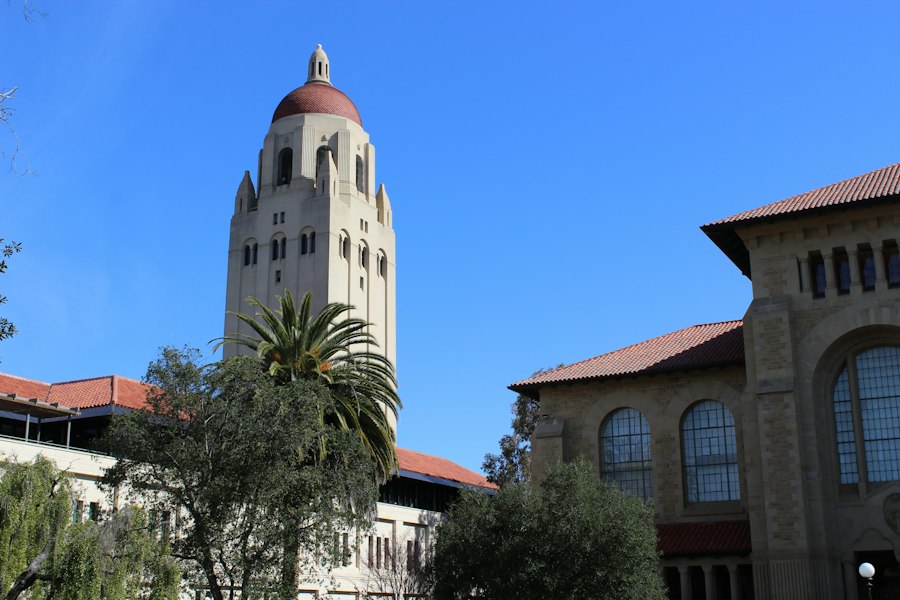
Stanford’s campus is expansive and beautiful, featuring Spanish Colonial Revival architecture and plenty of green spaces. The student body is highly diverse and intellectually curious, with a strong emphasis on extracurricular involvement. Athletics are a big part of Stanford life, with its teams often competing at the highest levels. There’s a vibrant arts scene, numerous student organizations, and a strong sense of community, despite the large campus. The proximity to tech giants offers unique internship and career opportunities.
2. California Institute of Technology (Caltech) (Pasadena, CA)
For those deeply passionate about science and engineering, Caltech is in a league of its own. It’s a small, highly selective institution dedicated almost exclusively to scientific research and technical education. Its impact on fields like physics, chemistry, biology, and aerospace engineering is immense.
Caltech’s Unique Academic Rigor
Caltech’s curriculum is famously challenging, designed to push students to their intellectual limits. The student-to-faculty ratio is exceptionally low, allowing for personalized mentorship and intense academic engagement. Research is integrated into the undergraduate experience from day one, with many students co-authoring papers with faculty. The institution prides itself on fostering critical thinking, problem-solving skills, and a deep understanding of scientific principles. It’s a place where students are expected to contribute to the advancement of knowledge.
Life as a Caltech Beaver
Given its specialized focus, Caltech attracts a particular type of student: brilliant, highly motivated, and often introverted or intensely focused on their studies. The campus community is tight-knit, with students often collaborating on projects and forming strong bonds through shared academic experiences. While academics are paramount, there are still opportunities for extracurriculars, including sports, arts, and unique campus traditions. The campus in Pasadena offers access to a vibrant city while maintaining a focused academic environment.
3. University of Southern California (USC) (Los Angeles, CA)
USC is a large, comprehensive research university with a strong presence in the heart of Los Angeles. It’s known for its broad range of highly-ranked programs, particularly in cinematic arts, business, engineering, and communication. USC has undergone significant revitalization and investment, making it a very attractive option for many.
Diverse Programs and Opportunities at USC
USC offers over 150 undergraduate majors across its numerous schools. Its School of Cinematic Arts is consistently ranked among the top film schools globally, producing many industry leaders. The Marshall School of Business and the Viterbi School of Engineering are also highly regarded. USC emphasizes interdisciplinary study and offers numerous minors and specialized programs. The university is a research powerhouse, with significant funding and opportunities for students to get involved in cutting-edge projects. Its location in LA provides unparalleled internship and networking opportunities across various industries.
The Vibrant USC Campus Experience
USC boasts a dynamic and diverse student body. The campus is lively, with a strong sense of school spirit, particularly around its successful athletic programs. There are countless student organizations, a thriving Greek life, and a wide array of cultural events. The university has made significant investments in campus facilities, creating a modern and welcoming environment. Being in Los Angeles means students have access to world-class entertainment, cultural institutions, and career opportunities right at their doorstep.
4. Pomona College (Claremont, CA)
Part of the Claremont Colleges consortium, Pomona is a highly selective liberal arts college known for its rigorous academics, small class sizes, and strong sense of community. It consistently ranks among the top liberal arts colleges in the nation.
The Pomona Academic Experience
Pomona offers a comprehensive liberal arts education, emphasizing critical thinking, writing, and interdisciplinary study. Students have a wide range of majors to choose from across the humanities, social sciences, natural sciences, and arts. The average class size is very small, fostering close relationships with faculty and encouraging active participation in discussions. A unique advantage of Pomona is its membership in the Claremont Colleges. Students can take courses at any of the other four undergraduate colleges (Claremont McKenna, Harvey Mudd, Pitzer, and Scripps), effectively expanding their academic options while retaining the intimacy of a small college.
Life in the Claremont Consortium
Pomona students benefit from the best of both worlds: a close-knit campus community within a larger university environment. The Claremont Colleges share facilities like libraries, dining halls, and health services, creating a vibrant social scene. There are numerous joint clubs, organizations, and events, allowing students to connect with peers from different academic focuses. The campus itself is beautiful and located in a charming suburban town, offering a more relaxed atmosphere than a large city, while still being within easy reach of Los Angeles.
5. Harvey Mudd College (Claremont, CA)
Also a member of the Claremont Colleges, Harvey Mudd is a unique institution focused on engineering, science, and mathematics, with a strong liberal arts component. It aims to educate leaders who understand the impact of their work on society.
Academics at Harvey Mudd
Harvey Mudd’s curriculum is exceptionally rigorous, requiring students to complete a common core curriculum in science, engineering, and mathematics before specializing. This broad foundation ensures graduates have a deep understanding across multiple scientific disciplines. The college emphasizes hands-on learning, design projects, and collaborative research. Students also take a significant number of humanities, social sciences, and arts courses, reflecting the college’s commitment to educating well-rounded individuals. The Clinic Program, a capstone experience where students work on real-world projects for industry clients, is a hallmark of the Harvey Mudd education.
The Harvey Mudd Community
Harvey Mudd attracts highly intelligent and collaborative students who enjoy solving complex problems. The community is supportive and friendly, with a strong emphasis on teamwork. While academics are intense, there’s a strong sense of camaraderie and a vibrant social scene, often intertwined with the other Claremont Colleges. Students participate in shared events, clubs, and sports, benefiting from the broader consortium while maintaining their distinct Harvey Mudd identity. The campus environment is focused and stimulating, perfect for those passionate about STEM fields.
Specialized Private Institutions Worth Considering
Beyond the widely recognized names, California also hosts several other excellent private universities that excel in specific areas or offer distinct educational experiences. These might be a perfect fit if your interests are more specialized.
6. Santa Clara University (Santa Clara, CA)
Santa Clara University is a Jesuit university located in Silicon Valley, known for its strong programs in business, engineering, and law, infused with a commitment to social justice and ethical leadership.
Santa Clara’s Academic Focus
SCU offers a comprehensive curriculum across its College of Arts and Sciences, Leavey School of Business, and School of Engineering. The university emphasizes experiential learning, combining rigorous academics with practical application. Its location provides excellent opportunities for internships and career development in the tech industry. The Jesuit tradition fosters a strong sense of community, critical thinking, and a focus on educating the whole person. Small class sizes and dedicated faculty are hallmarks of the SCU experience.
Campus Life and Values
Santa Clara’s campus is beautiful, blending historic and modern architecture. The student body is active and engaged, with a strong sense of service and community involvement. While rooted in Catholic tradition, SCU welcomes students of all backgrounds, emphasizing values like justice, compassion, and ethical engagement. There’s a strong athletic presence, a vibrant Greek life, and numerous student organizations. The university offers a supportive and nurturing environment, preparing students for professional success and responsible citizenship.
7. Pepperdine University (Malibu, CA)
Nestled in the picturesque hills of Malibu overlooking the Pacific Ocean, Pepperdine University is a Christian university with strong programs in business, law, and liberal arts. It’s known for its stunning campus and a commitment to faith-based education.
Pepperdine’s Academic Offerings
Pepperdine offers a wide range of undergraduate and graduate programs through its Seaver College (liberal arts), Graziadio Business School, Caruso School of Law, and Graduate School of Education and Psychology. The university emphasizes a holistic education, integrating faith and learning across disciplines. Class sizes are generally small, allowing for close faculty-student interaction. Many programs incorporate service-learning and international study opportunities, reflecting the university’s global outlook.
Life at Pepperdine
The campus is undeniably one of the most beautiful in the nation, offering an inspiring backdrop for learning. Pepperdine fosters a close-knit, supportive community rooted in Christian values, though it welcomes students from all backgrounds. Students are often involved in various campus ministries, service projects, and student organizations. Athletics are also a significant part of campus life. The Malibu location provides a unique blend of natural beauty and access to the cultural and professional opportunities of nearby Los Angeles.
8. University of San Francisco (USF) (San Francisco, CA)
The University of San Francisco is a Jesuit Catholic university located in the heart of one of the world’s most dynamic cities. It’s known for its strong programs in business, nursing, and liberal arts, with a focus on social justice and urban engagement.
Academics and Urban Engagement at USF
USF offers a diverse array of undergraduate and graduate programs through its College of Arts and Sciences, School of Management, School of Nursing and Health Professions, and School of Education. The university leverages its San Francisco location to provide unique learning opportunities, from internships in tech startups to clinical placements in leading hospitals. The Jesuit tradition emphasizes intellectual rigor, social justice, and a commitment to serving others. Students benefit from small class sizes and faculty who are experts in their fields, often with strong connections to the city.
The USF San Francisco Experience
Life at USF is inherently intertwined with the vibrant energy of San Francisco. The campus is urban, blending historic buildings with modern facilities, and offers incredible views of the city. The student body is diverse and globally minded, drawn to USF’s commitment to social impact. There’s a strong sense of community, despite being in a large city, fostered through numerous student organizations, service opportunities, and campus events. Students have unparalleled access to cultural attractions, career opportunities, and a truly unique urban university experience.
Navigating Admissions and Financial Aid
Applying to these top private universities can be competitive. Understanding the admissions process and how financial aid works is crucial for prospective students and their families.
The Admissions Process for Selective Schools
Most of these institutions use a holistic admissions review, meaning they look beyond just grades and test scores. They want to understand who you are as a person: your passions, leadership experiences, community involvement, and how you might contribute to their campus. Strong essays, compelling letters of recommendation, and a demonstrated interest in your chosen field can significantly bolster your application. Showing sustained involvement in extracurriculars, rather than just a long list, often resonates more.
Understanding Financial Aid and Scholarships
While the sticker price of private universities can be high, many offer robust financial aid packages that include grants, scholarships, work-study, and loans. Need-based aid is common, where the university assesses your family’s financial situation to determine how much assistance you qualify for. Merit-based scholarships are awarded based on academic achievement, talents, or other special qualifications, regardless of financial need. It’s crucial to fill out the FAFSA and, for most private schools, the CSS Profile to be considered for all available aid. Don’t let the initial cost deter you from applying; a substantial portion of students at these schools receive significant aid.
When considering the best private universities in California, it’s essential to explore various factors such as academic reputation, campus culture, and available resources. A great resource for understanding the nuances of educational choices is an insightful article that discusses the importance of language learning in today’s globalized world. You can read more about this topic in the article on English visual dictionaries, which highlights how effective communication can enhance your academic experience. For further details, check out the article here.
Making Your Decision
| University | Location | Undergraduate Enrollment | Acceptance Rate (%) | Average SAT Score | Tuition & Fees (Annual) | National Ranking |
|---|---|---|---|---|---|---|
| Stanford University | Stanford | 7,000 | 4 | 1420-1570 | 56,169 | 3 |
| University of Southern California (USC) | Los Angeles | 19,000 | 11 | 1360-1530 | 60,275 | 27 |
| California Institute of Technology (Caltech) | Pasadena | 1,000 | 6 | 1530-1570 | 58,680 | 9 |
| University of San Diego | San Diego | 6,000 | 49 | 1200-1400 | 53,000 | 103 |
| Santa Clara University | Santa Clara | 5,500 | 52 | 1200-1400 | 54,000 | 53 |
Choosing a university is a big decision. After exploring these top private institutions, take some time to reflect on what truly matters to you in your college experience.
Questions to Ask Yourself
- What academic programs truly excite me?
- Do I prefer a large research university or a smaller liberal arts college?
- What kind of campus culture would I thrive in? (e.g., highly competitive, collaborative, service-oriented, faith-based)
- Is location important to me (urban, suburban, coastal)?
- What resources are essential for my learning style and future goals (e.g., specific labs, career services, study abroad)?
- What is my comfort level with the potential cost and financial aid options?
By carefully considering these factors and researching each institution thoroughly, you’ll be well-equipped to make an informed decision that sets you up for success in 2024 and beyond.
FAQs
What are some of the top private universities in California?
Some of the top private universities in California include Stanford University, University of Southern California (USC), California Institute of Technology (Caltech), Pepperdine University, and Loyola Marymount University. These institutions are known for their academic excellence, research opportunities, and vibrant campus life.
What factors should I consider when choosing a private university in California?
When choosing a private university in California, consider factors such as academic programs offered, campus culture, location, tuition costs, financial aid options, faculty-to-student ratio, and extracurricular activities. It’s also important to visit campuses if possible to get a feel for the environment.
Are private universities in California more expensive than public universities?
Generally, private universities in California tend to have higher tuition rates compared to public universities. However, many private institutions offer substantial financial aid packages, scholarships, and grants that can help offset costs, making them more affordable for some students.
What is the admission process like for private universities in California?
The admission process for private universities in California typically involves submitting an application form, standardized test scores (such as SAT or ACT), high school transcripts, letters of recommendation, and personal essays. Some universities may also require interviews or additional materials depending on the program.
Do private universities in California offer online degree programs?
Yes, many private universities in California offer online degree programs across various fields of study. These programs provide flexibility for students who may be working or have other commitments, allowing them to complete their degrees remotely while still receiving a quality education.
About the Author